Just some clarity in terms of Masts and Residential Zones

Hi All,

Just some info in terms of masts in residential properties, and how / why CoCT is on a mission to get them taken down…

Effectively, CoCT is on a mission to get most “unauthorized” masts taken down. It’s not related to whether or not they received complaints, but rather a matter of “enforcing” the law.

In terms of the The of Cape Town’s Municipal Planning By-Law of 2015, Section 5 part 21 reads:
21 - Use of Property
The following use restrictions apply to properties in this zoning:

a) Primary uses are dwelling house, private road and additional use rights as specified in paragraph b

b) Additional use rights which may be exercised by the occupant of a property are home occupation, bed and breakfast establishments and home child care, subject to the following conditions:
(i) Only one of the activities listed as additional use rights shall be conducted on any land unit as a primary use. Where more than one such activity is required, the City’s approval shall be obtained;
(ii) The dominant use of the property shall be a dwelling house for accommodation of a single family;
(iii) The proprietor of the activity concerned shall live on the property;
(iv) The conditions stipulated in items 23, 24, or 25 (whichever is applicable) shall be adhered to;
(v) Any new structure or alteration to the property to accommodate an additional use right shall be compatible with the residential character of the area, particularly with regard to the streetscape, and shall be capable of reverting to use as part of the dwelling house, second dwelling, or outbuilding concerned; and
(vi) No more than three employees shall be engaged by the occupant in the activity concerned.

c) Consent uses are utility service, place of instruction, place of workship, house shop, institution, guest house, rooftop base telecommunication station, wind turbine infrastructure, open space, urban agriculture, second dwelling and halfway house.

In the act, telecommunication stations is defined as:

freestanding base telecommunication station’ means a freestanding support structure on land
or anchored to land and used to accommodate telecommunication infrastructure for the
transmitting or receiving of electronic communication signals, and may include an access road to
such facility;

rooftop base telecommunication station’ means a support structure attached to the roof, side or
any other part of a building and used to accommodate telecommunication infrastructure for the
transmitting or receiving of electronic communication signals;

Based on the above, in “standard” SR1 (Single Residential Zoning) dwellings, which most of us have, you must get approval from CoCT to put up a ROOFTOP base telecommunication service (ECNS required by CoCT, as is required by telecommunications act), and freestanding base telecommunication services are NOT allowed in terms of the by-law at all (it will be against section 21(b)(v)). Chapter 4 (section 20(2) also clearly lists what consent uses is allowed under SR1 zoning (i.e. you must get permission).

Community Zoning 1 & 2 (CO1 & CO2), Local Business Zoning 2 (LB2), General Business Subzones (GB1-GB7), Mixed-Use Subzones (MU1-MU3), etc. permit for the installation of rooftop base telecommunication infrastructure, without consent.

In terms of freestanding base telecommunication services (i.e. free standing masts), this is ONLY allowed in:
Community Zoning 1 (CO1): Consent Required
Community Zoning 2 (CO2): Consent Required
Local Business Zoning 2 (LB2): Consent Required
General Business Subzonings (GB1-GB7): Consent Required
Mixed-Use Subzonings (MU1-MU3): Consent Required
General Industry Subzonings (GI1-GI2): Free to errect

The Telecommunications Mast Policy (which some of you referred to previously) is applicable and is followed, but the policy does not trump the by-law. In accordance with the by-law, RESIDENTIAL ZONES, will never be allowed to have free standing masts. It is against building regulations, it is against the Municipal Planning by-law. If you re-zone your erf, yes, it then becomes a different ball game completely but good luck with that.

Just thought I’d let you guys know, precisely what CoCT is using in terms of getting masts taken down… Legally speaking, almost every single mast in CoCT is standing illegally currently. Sorry to be the bearer of bad news.

5 Likes

Fully agreed. Note that it is not the equipment as such that is “illegally mounted”, but the mast/pole that is the problem, even if it is a 10cm tube mounted 10cm above the ground on the wall. Going by this definition below (copied from the by-law), the following is also violations in the strictest sense:

  1. Your old M-Net grid (satellite dishes are specifically mentioned as allowed)
  2. An external antenna for improved cellular reception
  3. Radio HAM installations (See note below)
  4. Paid-for spectrum users (See note below)

Note: Your frequency, etc. is licensed, thus giving you the right to use it, but consent for RBTS or FTBS is not automatically granted.

Strictly speaking there’s a lot more if you really start splitting hairs, examples being CCTV camera systems mounted outdoors, Gate motors. Doorbells, etc. Remember that anything that can either send or receive a signal by the above definition.

Furthermore, most blocks of flats would also fail with this by-law as EACH antenna should appear on plans submitted for approval at some point, while those in commercial, etc. zoning that have RTBS as an additional right may not have it at longer that 3 meters from the point that it mounts (note that “top of roof” has no bearing here)

Edit: Maybe just an add-on on zoning is that smallholdings are not always zoned as agricultural as most of us would think, Joostenbergvlakte is zone as Rural, where RBTS is Consent Use and FTBS is a no-no…

3 Likes

No. Not correct. You are not PROVIDING infrastructure, you are RECEIVING - there is a fundamental difference between receiving telecommunication services, and providing telecommunications services (this hold true in the telecommunications act too). HAM is very interesting indeed, because HAM is even left out of the Telecommunications Act (as far as I recall).

As far as MDU (Multi Dwelling Units - i.e. flats go)… I had a quick look, at it seems MOST blocks of flats, are re-zoned as (at least) Local Business 2 (LB2), which means “rooftop base telecommunication stations” are allowed, without consent (CECNS licensing still required in terms of the Telecommunications Act, and here now, the CoCT’s “mast policy” document will start to come into play).

PS: Section 5 part 21 in my original post, that excerpt is obviously the one applicable to SR1 (Single Residential) Zoning only… Each type of Zone has their own little paragraph of what is / is not allowed. It’s actually rather clear when one sits and read the damn thing…

Note that the definition from the bylaw reads “OR” and not “AND”, as such anything mounted outside the house that can send OR receive a signal (electronically is thus the mounting will be deemed illegal

Accepted and agreed. As I am currently in a battle with COCT in this regard, I actually studied the entire by-law (up to the point that I can tell you that some older low-pressure hot-water cylinders also contravene on it’s own specified height restriction)

Can send OR receive in order to ACCOMMODATE infrastructure… More precisely, ACCOMMODATE TELECOMMUNICATIONS infrastructure (which, could arguably exclude HAM Radio)

Your DSTV dish / TV Arial / Door Bell, is not ACCOMMODATING infrastructure for others to use :slight_smile: An AP running in station mode, is not ACCOMMODATING infrastructure, whilst a AP in ap-bridge mode, IS ACCOMMODATING infrastructure (you are accommodating connections from others, and are providing a telecommunications network service as defined in the Telecommunications Act).
It works the same way in which the Telecommunication acts classify CECNS licensees, in terms of the CECNS license holder is permitted to PROVIDE infrastructure.

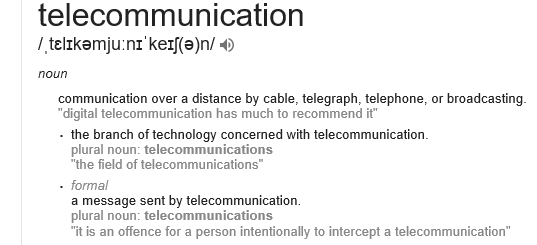
As per the deifinition of the word telecommunication, nothing is excluded:
[quote=“Savage, post:7, topic:10139”]

Your DSTV dish, is not ACCOMMODATING infrastructure for others to use :slight_smile: An AP running in station mode, is not ACCOMMODATING infrastructure, whilst a AP in ap-bridge mode, IS ACCOMMODATING infrastructure (you are accommodating connections from others, and are providing a telecommunications network service as defined in the Telecommunications Act).
[/quote]

DSTV dish is a satellite dish, and specifically mentioned in the by-law as accepted. As far as any device only receiving a signal (be it wired or wireless), the mounting structure for the device is in terms of the definition in the previous post illegal. The content of the communication is never discussed, only the fact that the communication could occur.

Nowhere in the by-law is this mentioned, and as such would not apply. The by-law is a right by the local authority in terms of the constitution, and can as such override any other permission given.

1 Like

As per the definition of “rooftop base telecommunication station” and “freestanding base telecommunication station” in the act, there is a clear line drawn in that it is for the ACCOMMODATING (i.e. provide or supply) of telecommunication infrastructure only.

Based on this, yes, I will technically agree with your doorbell argument (but good luck in court with that), but I still maintain in terms of TV Arials, or APs running in station mode, etc… You’re not ACCOMMODATING anything and thus legal.

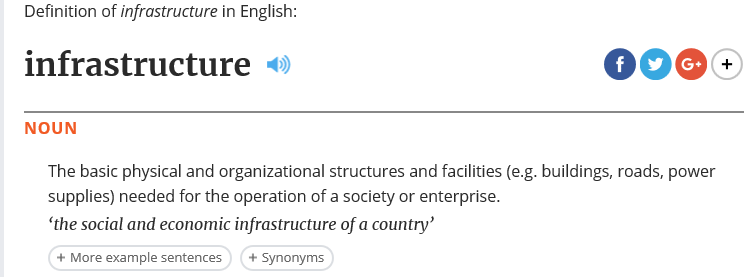
In this case it refers to the structure that accomodates the equipment, (for clarity, definition below)

[quote=“Savage, post:9, topic:10139”]Based on this, yes, I will technically agree with your doorbell argument (but good luck in court with that), but I still maintain in terms of TV Arials, or APs running in station mode, etc… You’re not ACCOMMODATING anything and thus legal.
[/quote]

Effectively anything that can make “sense” of the signal it receives counts as part of a telecommunication system, so a TV aerial does fall under that, as obviously a device in station mode does as well

No. Read the definition again. ACCOMMODATING TELECOMMUNICATION INFRASTRUCTURE. It does not refer to structures, it does not refer to buildings, roads, power supplies, whatever. It refers to TELECOMMUNICATION INFRASTRUCTURE. The providing of TELECOMMUNICATION services.

A TV Arial is, as you say, “telecommunication infrastructure”, yes. Absolutely. In terms of the by-law however, you are not ACCOMMODATING it (i.e. providing it for others use). Your TV antennae does not transmit signals purposefully for others to use.

You’re taking this WAY out of context. You will be laughed at in court, with these kind of arguments.

The by-law also prohibits the infrastructure for accommodating equipment receiving signals, which is what that antenna is for.

I think we can agree to disagree on some points here, most of these points has been run past attorneys who do not see any glitches with that reasoning…

All depends on how “ACCOMMODATING” is defined.

If that means providing for others then yes @Savage your points could hold up.

If that means simply providing a place for said infrastructure to be erected (aka accommodating space for said infrastructure) then yes @Stiaanm your points could hold up.

In all fairness @Stiaanm has been dealing with this exact issue as of late, so i feel as someone looking in that has no knowledge of the actual laws that his definition is probably slightly more credible, however, thats not to say it is the correct term…

Probably depends on the judge you get on the day haha

@Savage, how do you know they are on a mission to take masts down?

2 Likes

Is it possible for this to be on the GM agenda so everyone could be aware of rules and regulations with regards to mast setups.

1 Like

Apart from getting some questions answered, nobody can at this point do anything about it. The definitions and exclusions is so wide that effectively you cannot run an underground network cable to your neighbour (it attaches somewhere on your house, and electronic signals are both sent and received) without being in violation of it.

The only real thing that can be done it to try & get a big enough “petition” to be taken to the lawmakers (incidentally, most of them would likely be in violation as well) for them in an attempt to either repeal it or change it.

For those interested in reading: https://www.westerncape.gov.za/eadp/files/basic-page/uploads/City%20of%20Cape%20Town.pdf

1 Like

I’m not so sure COCT is on a crusade here. I think WISPS and security companies are the ones turning CoCT’s attention to these masts.

2 Likes

Just going to leave this here then… As a CECNS and CECS license holder, I have a 12m as well as a 15m (yes, two towers, two locations), that must be down by pretty much the end of November. One’s moving up to Tygerberg Hills, the other’s still looking for alternative solutions.

No - it’s not always the poor WISPs and licence holders. We’re not all your enemy as your so frequently try to make us.

2 Likes

How much people thus far have they asked to take down masts on CTWUG and in which areas

Up to fairly recently (a year or so, perhaps), they have not asked ANYONE to “take down”. Even for us, as license holders - this is almost unheard off and there’s plenty of people in the industry very worried about this new “trend” that is forming. None yet, has the insights of @Stiaanm or his wisdom, so no action planned from industry yet other than to comply.

For some reason, CoCT is taking a tougher and tougher stance on telecoms / facilities / infrastructure providers. Not only WISPs and Towers and High Sites. Cell phone masts, way-leaves / permits for fiber, the works. CoCT has become one of the hardest municipalities to work with in terms of telecoms infrastructure - period. It could be related to the fact that (last I heard), there was some 160 registered ECNS licensees just in the CoCT municipality alone. It is becoming more than more clear that preference are given to certain license holders, whilst the others are facing such uphill battles from the city that one can only come to the conclusions that they are being pushed out of the market.

I can’t talk for the WUG itself, but CoCT is dead set against any kind of infrastructure, if it’s not from, literally, a hand pick few select telecom infrastructure companies.